Haller Clock Restoration Journey
When this remarkable Haller clock arrived at our workshop, it was in need of an
hour strike repair. The strike train had been silent for years, and upon
investigation, a broken mainspring was identified as the culprit. However, our
inspection revealed several other issues, and with the client’s approval, we
embarked on a full movement restoration coupled with a conservative case
restoration.
Movement Restoration
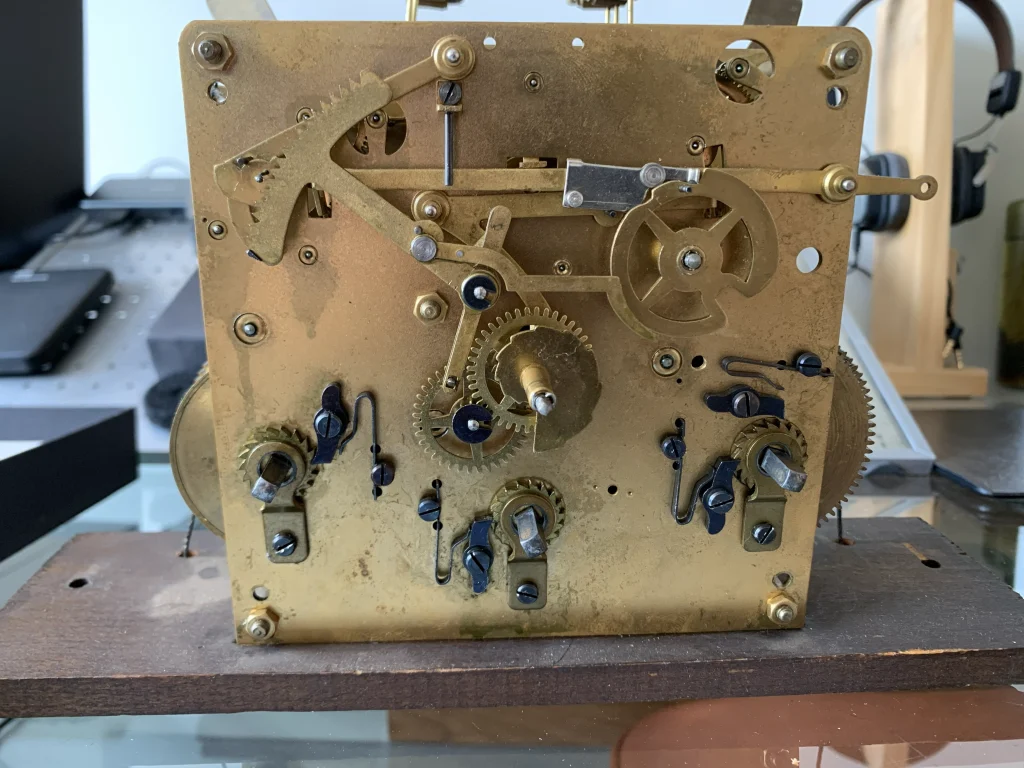
Our process began with the clock’s movement. We meticulously checked pivots
and bushings for excessive wear, identifying a few that required re-bushing. A
significant issue was the over-oiling of the movement, with oil even coating the
teeth of the wheels. This not only causes drag, slowing the clock down, but
also attracts dust, accelerating wear and tear.
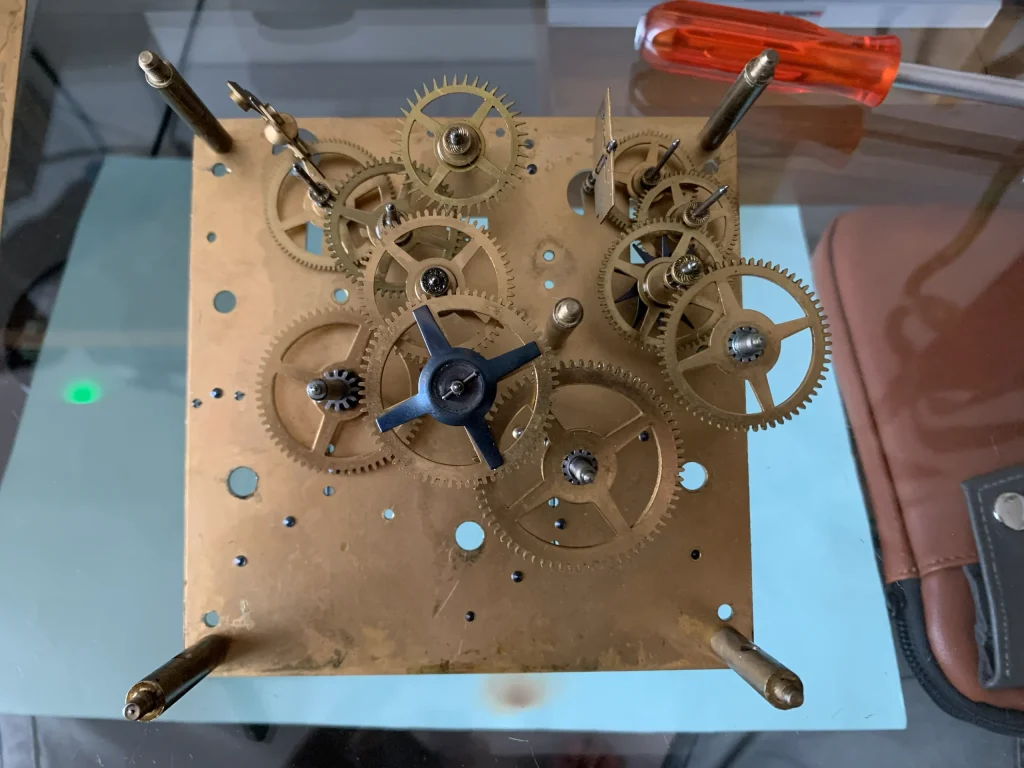
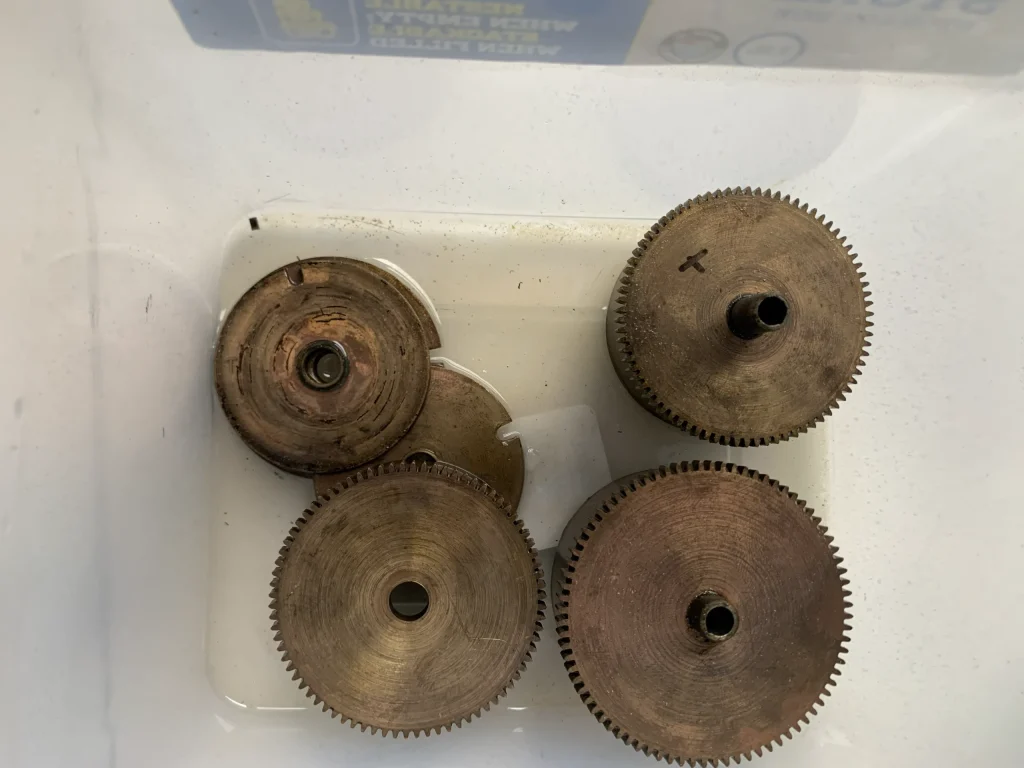
To address this, the movement was completely disassembled and all parts then
soaked in a degreaser to remove the excess oil. After rinsing and drying, each
part underwent a detailed inspection to identify potential issues; this included
checking for pivot wear, tooth damage, and ensuring all rotating parts ran true.
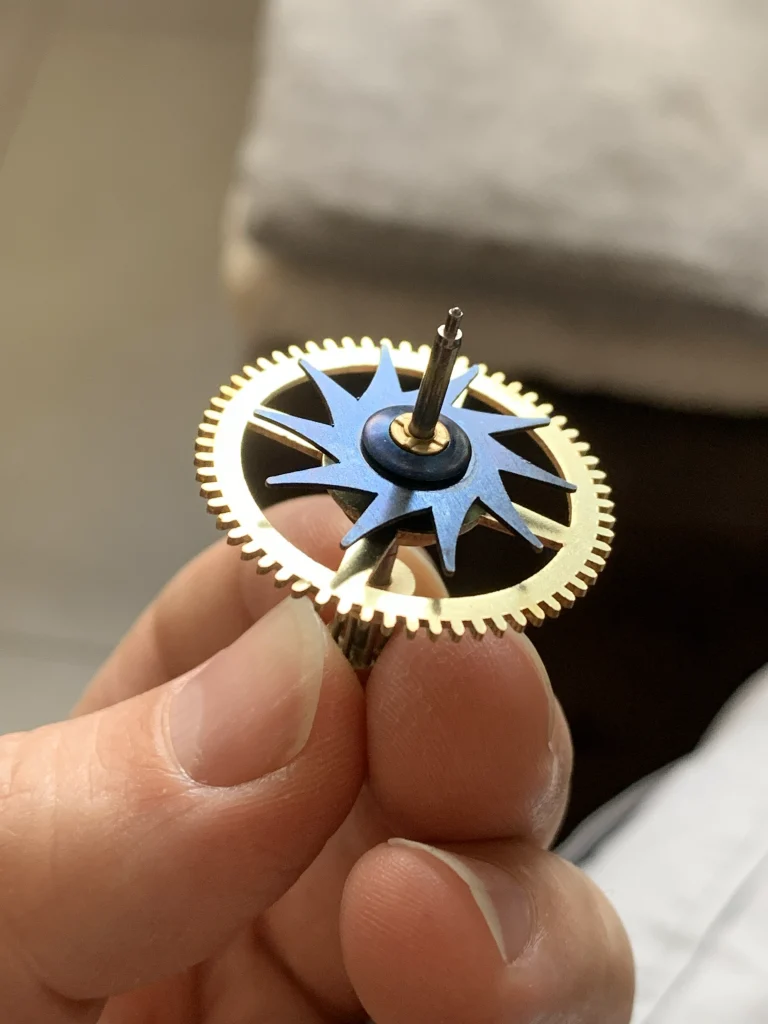
Thankfully, most components were in good shape, though we did find a bent
shaft on the second wheel of the strike side, likely a result of the mainspring
failure.
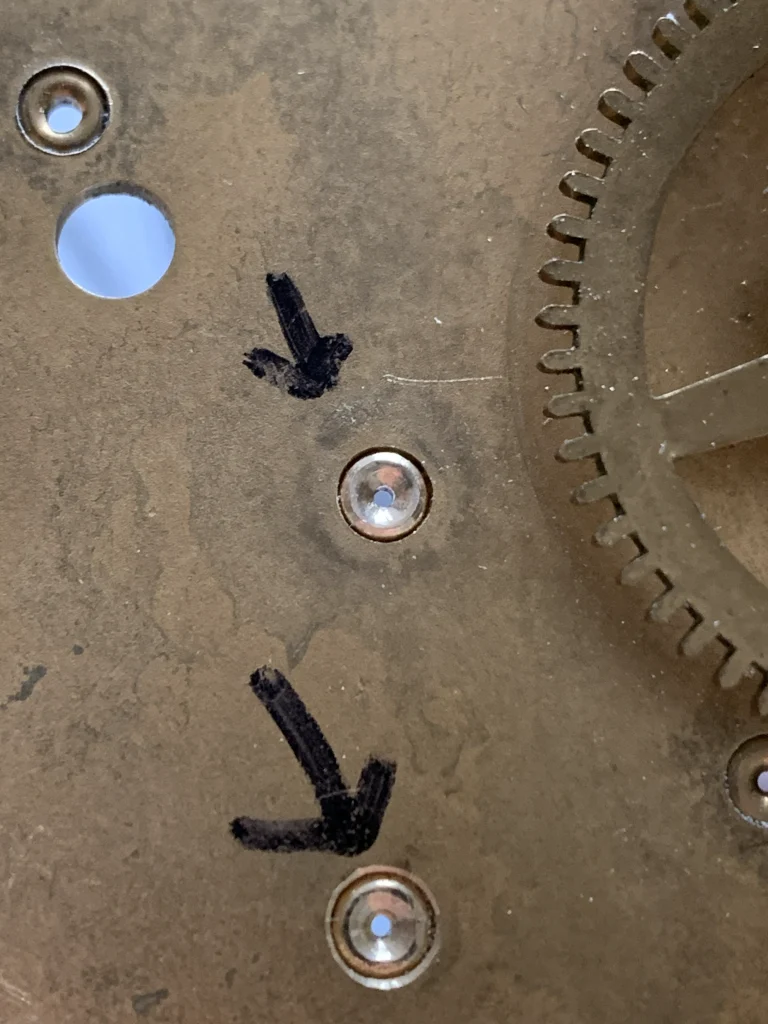
We crafted and installed three new bushings, a common necessity for clocks
nearing the century mark. Following reassembly, the movement was properly
oiled, fitted with a new mainspring for the strike train, and tested over two
weeks with adjustments to ensure smooth operation.
Dial and Hands Refinement
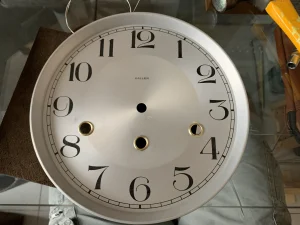
Next, attention turned to the dial and hands. The dial bore marks, dirt, and
areas where the numbering had faded. Using gentle, conservative cleaning
methods, we removed years of built-up grime while preserving the integrity of
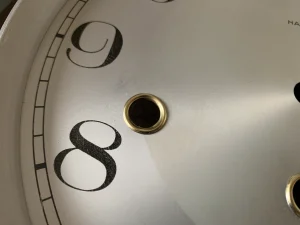
the original finish. Missing hour numerals were carefully repainted, and absent
brass eyelets for the keyholes were replaced.
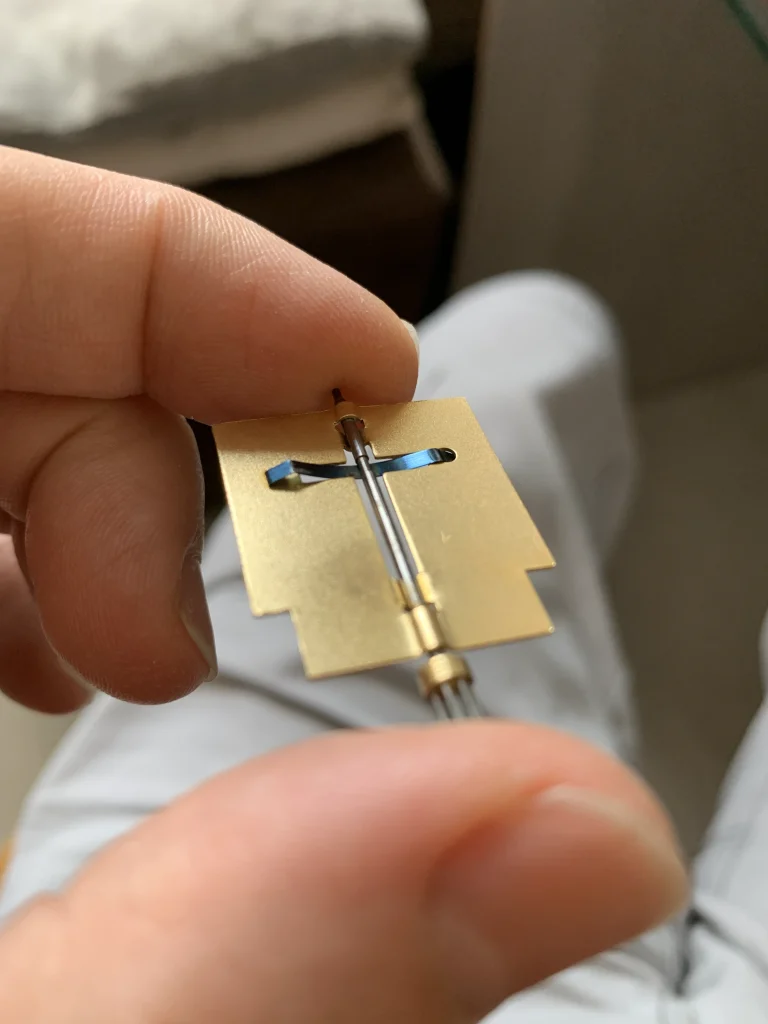
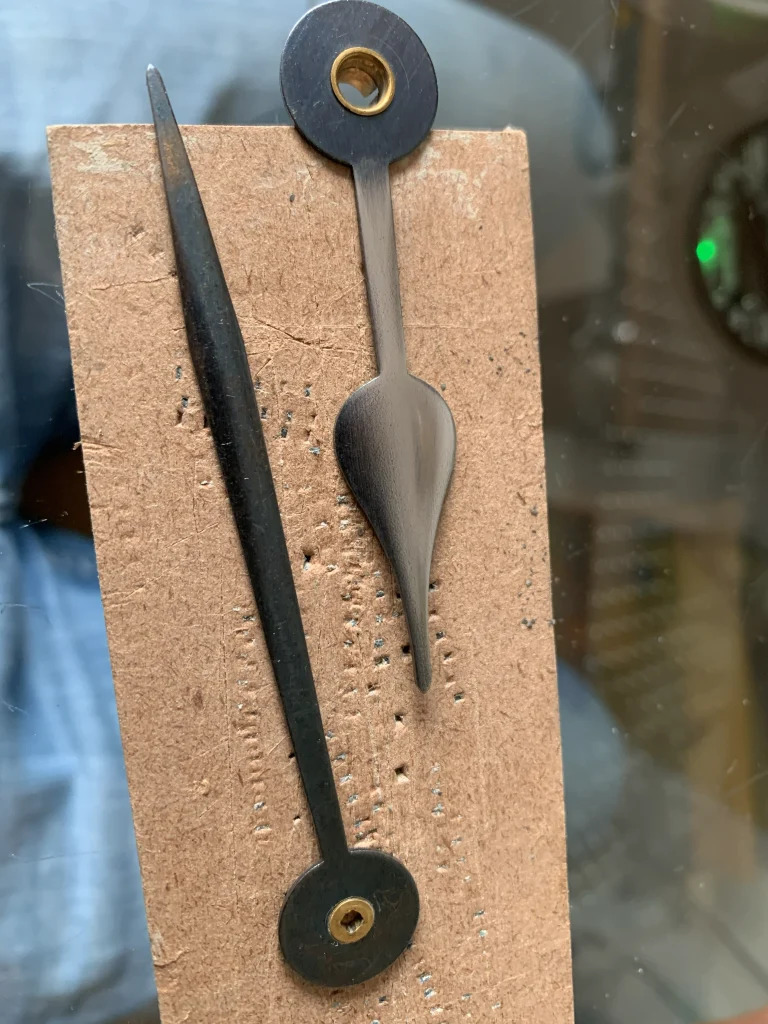
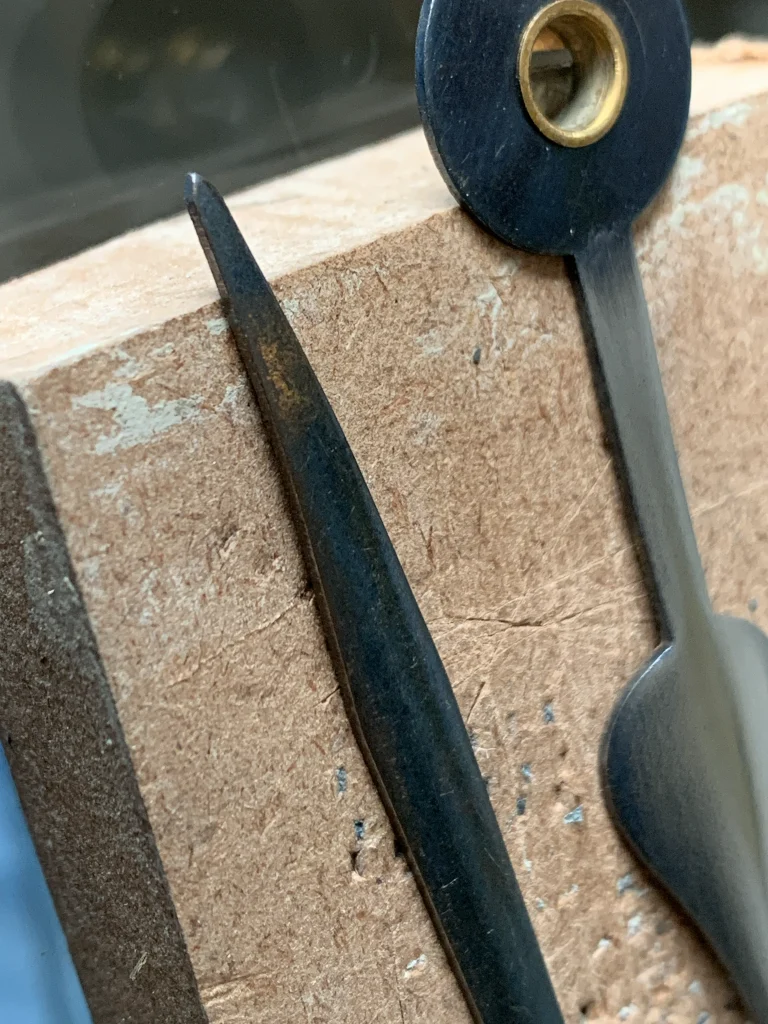
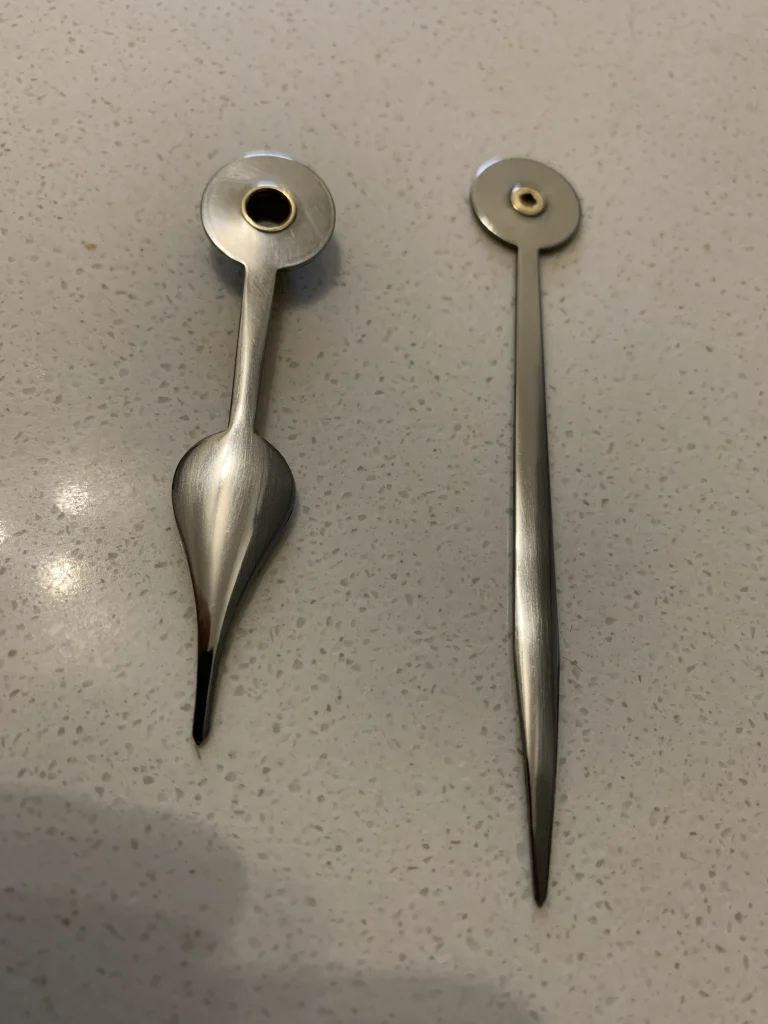
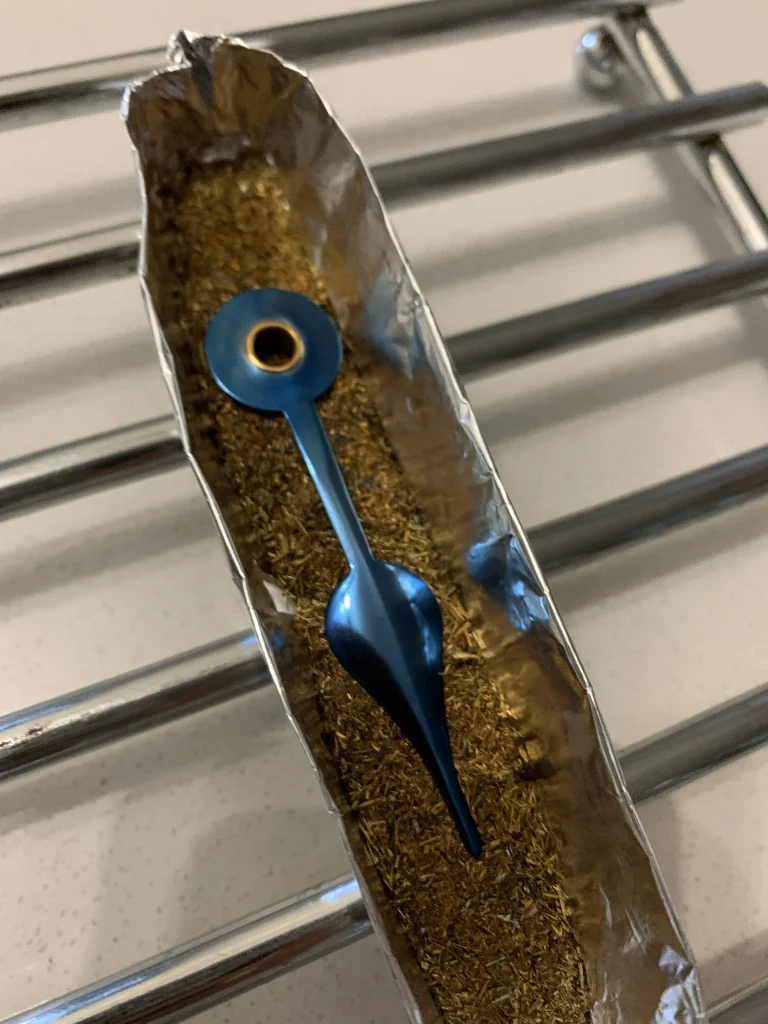
The hands showed signs of corrosion and paint loss. Noticing traces of blue
tempering on the reverse side, we decided to re-blue the hands, enhancing their
appearance and creating a beautiful contrast with the brass eyelets.
Case Restoration
The clock’s case had been varnished over, leaving it rough and discoloured. We
began by delicately removing the glass, which had varnish residue that was
easily cleaned with steam. Testing small sections revealed the original shellac
finish remained intact beneath the varnish. After several trials, we found that
paint thinners could effectively remove the varnish without harming the shellac.
With painstaking care, we stripped the varnish section by section, revealing a
stunning wood grain previously hidden from the owner’s view. The shellac was
then refinished and protected with a wax layer, enhancing the wood’s natural
depth and beauty. The glass was reinstalled and given a final polish.
Final Assembly and Delivery
After reassembling the clock, we fine-tuned its chimes and strike to ensure the
correct resonance and sustain. Finally, we delivered and installed the clock at
the client’s residence, conducting a last round of checks to confirm it was
running perfectly and sounding exquisite.
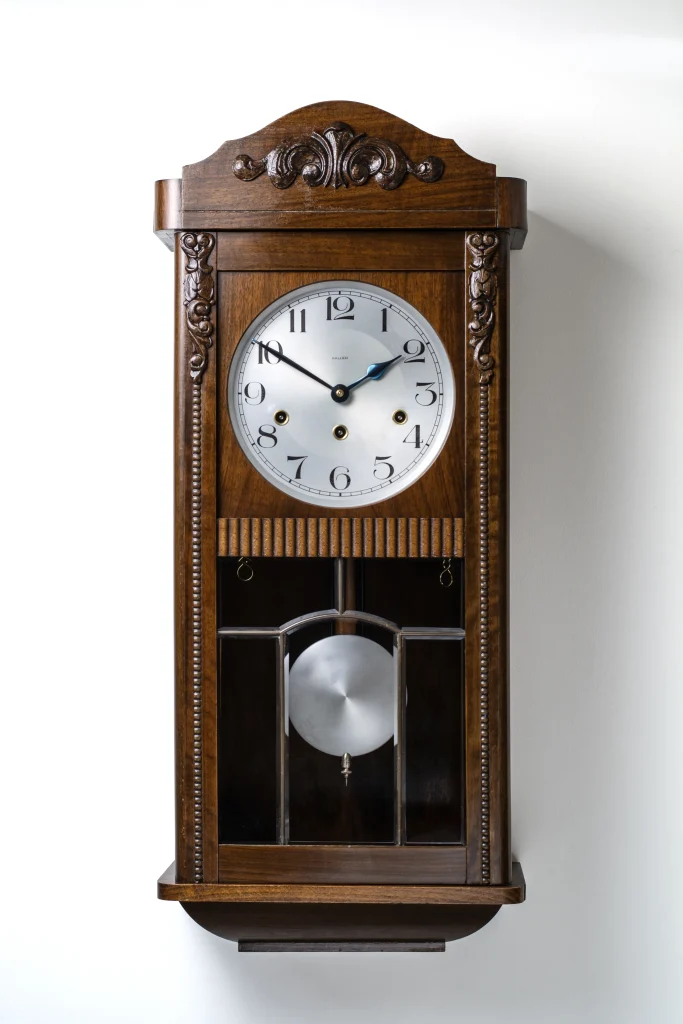
This Haller clock now stands as a testament to timeless craftsmanship,
restored to its former glory with meticulous care.